
How to Verify Whether an Investment Platform Is Regulated
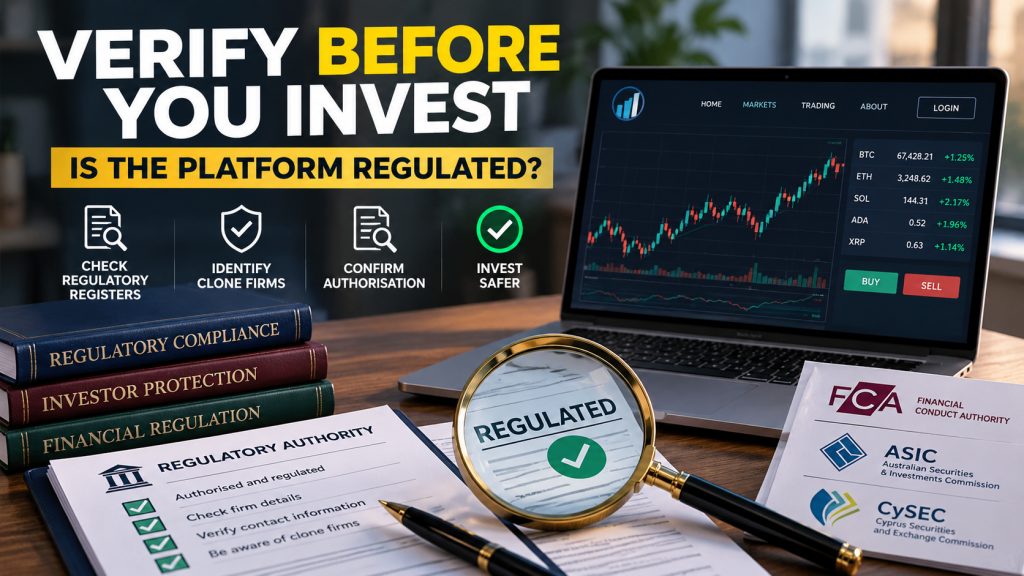
Before depositing money with an online investment or trading platform, one of the most important checks you can make is whether the company is genuinely regulated. A professional website may display licence numbers, certificates, regulator logos and claims such as “fully regulated,” but these statements should never be accepted without independent verification. Learning how to verify an investment platform is regulated can help investors identify inconsistencies before money is transferred. If you have already deposited funds with a questionable platform and need to document what happened, you can Submit a Case with the relevant information for review.
Start With the Regulator, Not the Platform
When a platform claims to be regulated, identify exactly which authority supposedly supervises it.
For example, a firm offering regulated investment services in the UK may claim authorisation from the Financial Conduct Authority. Rather than following a link supplied by the platform, investors should independently visit the FCA Firm Checker or Financial Services Register and search for the business.
In the United States, investors can use official resources such as Investor.gov, the SEC’s Investment Adviser Public Disclosure database and FINRA BrokerCheck to investigate registration information.
The important principle is simple: obtain regulatory information from the regulator itself, not solely from the company asking for your money.
Company Registration Is Not the Same as Financial Authorisation
One common source of confusion is a company registration number.
A business may be legally incorporated in a jurisdiction without having permission to provide regulated investment services. Company registration generally establishes the existence of a legal entity; financial authorisation concerns whether that entity has permission to conduct particular regulated activities.
The FCA, for example, distinguishes between firms that are authorised and those that are merely registered for certain purposes. It also advises consumers to check whether a firm has permission for the specific product or service being offered.
Therefore, finding a company name in a corporate registry should not end your investigation.
Check the Name, Domain and Contact Information
Finding a genuine regulated company with a similar name is not enough.
Compare the regulator’s records with the platform you are actually dealing with. Examine the legal company name, website domain, telephone number, email addresses and physical address.
This is particularly important because of clone firm warning signs. A clone operation may copy the name, address or regulatory reference number of a legitimate authorised company while directing investors to an unrelated website, telephone number or email address.
If the regulator lists one website but the person contacting you uses another, investigate the discrepancy before sending money.
Verify What the Firm Is Allowed to Do
Regulation is not necessarily an all-or-nothing label.
A firm may have permission for certain activities but not others. Investors should therefore check whether the regulatory permissions actually cover the service being promoted.
For example, the fact that an entity appears in an official database does not automatically establish that every forex, CFD, cryptocurrency or investment product promoted under its name is regulated.
Read the regulator’s entry carefully rather than simply looking for a matching company name.
Look for Regulatory Warnings
Official warning databases are another valuable part of the verification process.
Regulators may publish warnings concerning firms believed to be providing financial services without appropriate permission or entities suspected of impersonating legitimate businesses.
Search using several identifiers, including the platform name and website domain. The domain can be especially useful because similar company names may belong to completely unrelated businesses.
A warning should be reported according to what the regulator actually says. Its existence is important evidence, but it should not be exaggerated into conclusions that the regulator itself has not made.
Be Suspicious of Documents That Cannot Be Verified
Investment platforms may display certificates, registration documents or licence numbers as evidence of legitimacy.
Documents can look convincing while still being outdated, misused or unrelated to the website displaying them. Instead of judging a certificate by its appearance, verify the information directly with the authority supposedly responsible for issuing it.
The same principle applies to claims about insurance, segregated client accounts and compensation protection.
Verify an Investment Platform Is Regulated Before You Deposit
Regulatory verification is most valuable before money changes hands.
Take a few minutes to independently check the company, domain, permissions and contact details. If information conflicts, stop and investigate the discrepancy.
If you have already transferred funds and later discover regulatory inconsistencies, preserve account screenshots, payment receipts, communications and withdrawal requests. Our guide explains how to preserve evidence after cryptocurrency fraud when digital assets or online investment platforms are involved.
Final Thoughts
Knowing how to verify whether an investment platform is regulated requires more than finding a licence number on its website.
Start with the regulator’s official database. Confirm the exact legal entity, compare the domain and contact information, examine the firm’s permissions and search for relevant warnings. Most importantly, distinguish ordinary company registration from actual financial authorisation.
These checks cannot eliminate investment risk, but they can help investors make decisions based on independently verifiable information rather than marketing claims alone.