
What Does an FCA Warning Mean for Investors?
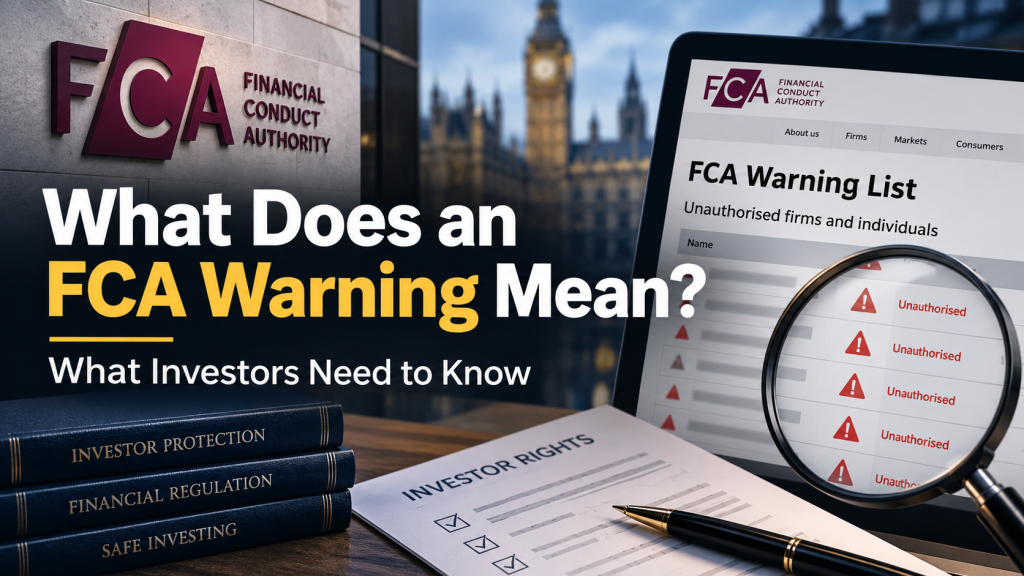
When researching an investment platform, discovering that it appears on the Financial Conduct Authority’s Warning List can immediately raise concerns. But what does an FCA warning mean, and how should an investor respond to one? An FCA warning is important regulatory information, but understanding exactly what it says — and what it does not say — is essential. Investors who have already transferred money to a platform that later becomes the subject of regulatory concerns can also Submit Your Case to TopMatters for an initial assessment of the available information.
What Does an FCA Warning Mean?
The Financial Conduct Authority regulates financial services and markets in the United Kingdom. Most firms carrying out regulated financial activities in the UK must be appropriately authorised or registered.
The FCA maintains a Warning List containing firms and individuals it is concerned may be operating without the required permission.
When the FCA publishes a warning about a particular investment website or company, investors should therefore take it seriously. The warning may indicate that the regulator believes the business is providing or promoting financial services without the necessary authorisation.
However, an FCA warning should be read precisely. It is regulatory information and should not automatically be expanded into allegations that the regulator itself has not made.
Unauthorised Does Not Mean the Same as Authorised
One of the most important distinctions for investors is between a firm claiming to offer financial services and a firm that actually has permission to provide them.
FCA authorisation means a firm has met certain regulatory requirements and has permission for specified activities. Even then, investors should check the firm’s exact permissions because authorisation does not necessarily cover every product or service a company might advertise.
This is why investors should verify whether an investment platform is regulated before making a deposit.
Do not rely solely on an FCA logo, registration number or statement such as “regulated” appearing on a website. Verify the information independently.
What Protections Could You Lose?
Dealing with an unauthorised firm can significantly affect the protections available when something goes wrong.
The FCA warns that consumers dealing with unauthorised firms generally will not have access to the Financial Ombudsman Service for complaints. They may also lack protection from the Financial Services Compensation Scheme if the firm fails.
That does not mean every investment made through an authorised firm is automatically protected. Protection can depend on the particular product, service and circumstances.
The important point is that using an unauthorised firm can remove safeguards that an investor might otherwise expect to have.
Check the Exact Website — Not Just the Company Name
Regulatory verification should extend beyond searching for a familiar business name.
Fraudsters sometimes impersonate legitimate financial companies by copying their names, addresses or regulatory details. These are commonly described as clone firms.
A website might therefore mention the name or registration information of a genuine company without actually belonging to that company.
Compare the website address, telephone number, email address and other contact information with the details provided through the regulator’s official records.
This is particularly important when researching platforms such as Alphaoptionspro.live, Hedgeprimemarket.com, and Smtyieldgroup.live, where FCA warnings formed an important part of our recent platform reviews.
A Warning List Is Not the Same as a Complete Safety List
There is another important point investors sometimes overlook.
The absence of a platform from the FCA Warning List does not prove that the platform is legitimate or authorised.
Regulators cannot necessarily identify every unauthorised operation immediately. Websites can appear quickly, change domains or operate under different names.
Instead of asking only, “Is this website on the Warning List?” investors should also ask:
Is the firm actually listed as authorised? Does it have permission for the service being offered? Do the contact details match? Is the website address connected to the regulated entity?
Those checks provide much stronger due diligence than relying on a simple search for negative reports.
What If You Have Already Deposited Money?
Discovering a regulatory warning after depositing funds can be worrying, but reacting carefully is important.
Start by preserving evidence. Save bank transfers, cryptocurrency transaction hashes, wallet addresses, emails, account statements, screenshots and conversations with platform representatives.
If you are experiencing withdrawal problems, be especially cautious about requests for additional money. Demands for supposed taxes, account upgrades, verification charges or release payments should be independently verified before anything further is sent.
Our guide to investment withdrawal fees explains why unexpected payment demands during a withdrawal deserve additional scrutiny.
Depending on how payment was made, you may also need to contact your bank, card provider, cryptocurrency exchange or relevant authorities promptly.
Use the FCA’s Own Verification Tools
The safest way to check UK regulatory claims is through official FCA resources.
The FCA Firm Checker can help consumers determine whether a financial firm is authorised and whether it has permission for the service being offered. The Financial Services Register provides more detailed regulatory information, including historical records.
Always compare the details carefully rather than assuming that a matching or similar company name proves a connection.
Final Thoughts
So, what does an FCA warning mean for an investor?
At minimum, it means there is regulatory information serious enough to justify stopping and conducting further checks before transferring money. It may indicate that a firm is operating or promoting financial services without the required permission, potentially leaving consumers without important protections.
An FCA warning should not be exaggerated beyond what the regulator actually states, but neither should it be ignored.
For investors, the practical rule is straightforward: check the regulator, verify the exact firm and website, understand the permissions involved, and resolve any inconsistencies before making a deposit.