
What to Do After Sending Cryptocurrency to a Suspected Fraudulent Platform
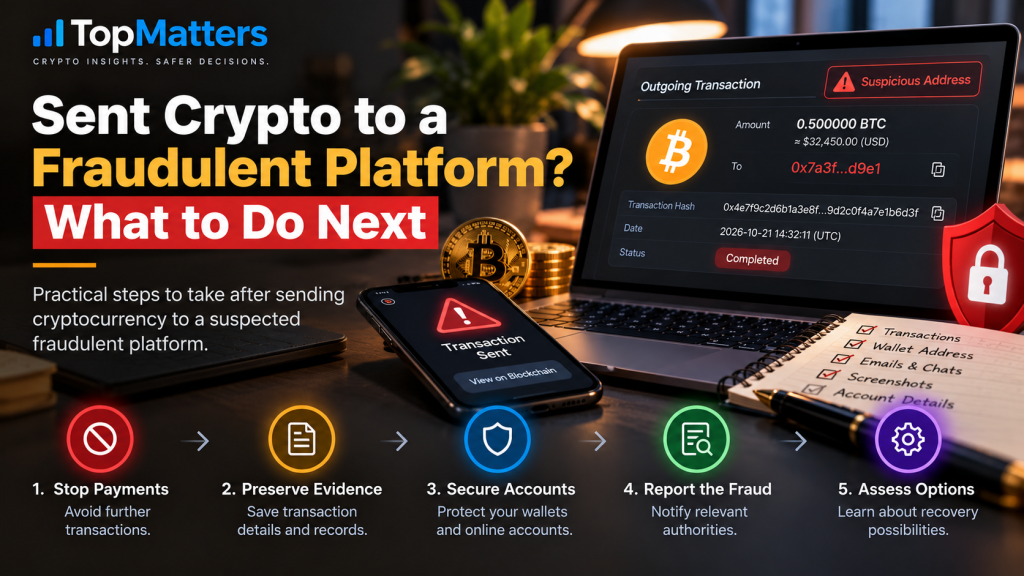
Discovering that cryptocurrency may have been sent to a fraudulent platform can be alarming. The most important response is not to panic or immediately send more money. Instead, preserve the evidence, secure your accounts, document what happened, and determine what practical options may still be available.
If you sent crypto to a fraudulent platform or suspect that an investment website, broker, or individual has misled you, the steps you take immediately afterward can affect the quality of any later investigation.
Stop Sending Additional Cryptocurrency
The first step is simple: stop making additional payments until you can independently establish what is happening.
A suspicious platform may claim that another payment is required for taxes, account verification, withdrawal processing, insurance, liquidity, or an “unlocking” fee.
Do not assume that another payment will release the balance displayed in your account.
A balance shown on a website or dashboard is not, by itself, proof that the platform actually holds those assets on your behalf.
Be particularly cautious if you are being pressured to act quickly or warned that your account will be frozen unless another payment is made.
Preserve Your Transaction Evidence
If you sent crypto to a fraudulent platform, preserving transaction information should be one of your highest priorities.
Collect the records that can establish how the cryptocurrency moved, including:
- Transaction hashes or transaction IDs
- Sending and receiving wallet addresses
- Cryptocurrency type and amount
- Transaction dates and times
- Exchange withdrawal records
- Payment receipts
- Screenshots of relevant account activity
A transaction hash is especially useful because it can provide a verifiable reference to an on-chain transaction.
Do not delete messages or close accounts simply because you no longer trust the platform.
Save Communications and Platform Information
Blockchain evidence tells only part of the story.
Preserve emails, text messages, chat histories, usernames, telephone numbers, social-media accounts, website addresses, and any documents provided by the platform.
If someone gave you specific wallet addresses or payment instructions, preserve those communications as well.
Create a simple timeline showing when contact began, what representations were made, when payments occurred, and when problems with withdrawals or communication started.
TopMatters’ Before you submit a case: organise the facts guide explains how to prepare this information for an assessment.
Contact the Exchange or Service You Used
If cryptocurrency was purchased or transferred through a centralized exchange or another identifiable service provider, consider contacting its fraud or compliance department promptly.
Provide accurate transaction information and explain what happened.
An exchange cannot necessarily reverse a completed blockchain transaction, but reporting the incident can still be important. Depending on the circumstances, the service may be able to document the complaint, review relevant account activity, or explain what formal reporting procedures are available.
Avoid exaggerating what happened. Clear transaction records and a concise timeline are more useful than unsupported conclusions.
Secure Your Accounts and Wallets
If you shared account credentials, installed remote-access software, connected a wallet to a suspicious website, or disclosed sensitive security information, securing your remaining assets becomes a priority.
Change compromised passwords and review account security settings.
Remove unauthorized applications or wallet connections where appropriate, and review your devices for unfamiliar software.
If you believe a wallet’s seed phrase or private key has been exposed, that wallet should no longer be treated as secure.
Never provide a seed phrase, private key, password, or authentication code to someone claiming they need it to trace or recover cryptocurrency.
Report the Suspected Fraud
Reporting the incident can create an official record and may help authorities connect related complaints.
In the United States, cryptocurrency-related fraud can be reported to the FBI’s Internet Crime Complaint Center (IC3). Depending on the circumstances, other financial or consumer-protection authorities may also be relevant.
When submitting a report, include transaction hashes, wallet addresses, amounts, dates, website information, communications, and other available evidence.
Keep copies of any reports or reference numbers you receive.
Consider Blockchain Transaction Tracing
Cryptocurrency transactions recorded on public blockchains may provide an investigative trail.
Blockchain transaction tracing can help reconstruct how digital assets moved after the original transfer, identify subsequent wallet activity, and potentially reveal interactions with identifiable cryptocurrency services.
Tracing does not automatically identify every wallet owner, nor does it guarantee that cryptocurrency can be recovered.
TopMatters’ How Blockchain Transaction Tracing Works After Cryptocurrency Fraud guide explains the process and its limitations in more detail.
Be Careful of Recovery Scams
People who have already lost money can become targets a second time.
Be cautious if someone unexpectedly contacts you claiming they have located your cryptocurrency or already recovered it.
Warning signs can include guaranteed recovery claims, demands for cryptocurrency payments before funds can be released, requests for wallet credentials, or claims that a special tax or blockchain fee must be paid directly to the recovery provider.
TopMatters’ Recovery promises: the warning signs to recognise guide explains common warning signs to watch for before engaging a recovery service.
Understand What Recovery Actually Requires
Finding a transaction on a blockchain and recovering the associated assets are different things.
A trace may establish where cryptocurrency moved, but recovery can depend on whether identifiable services are involved, whether relevant assets remain accessible, what evidence exists, and what legal, regulatory, compliance, or law-enforcement options are available.
Our Digital Asset Recovery: What It Is, How It Works, and What Victims Should Know guide explains this distinction and the broader recovery process.
Take an Evidence-First Approach
If you sent crypto to a fraudulent platform, the strongest immediate response is to stop additional payments, preserve evidence, secure potentially compromised accounts, report the incident, and establish what can actually be verified.
Avoid anyone who promises a guaranteed result before reviewing the transaction evidence.
At TopMatters, an assessment begins with the available facts: transaction records, wallet addresses, communications, platform information, and the sequence of events.
If you have this information available, you can submit your case for an initial assessment so the evidence can be reviewed and realistic next steps considered.