
How to Preserve Evidence After Cryptocurrency Fraud
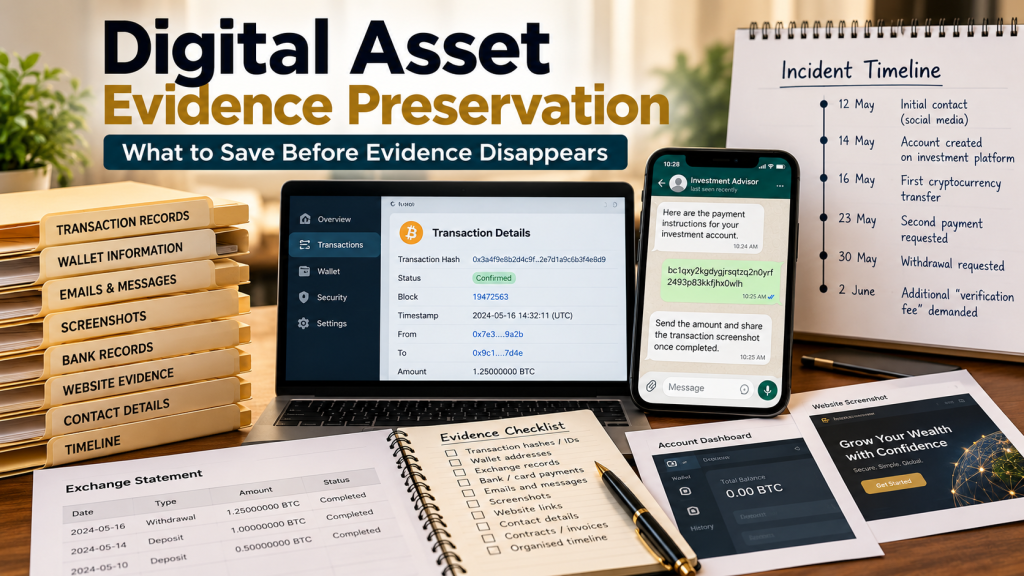
Cryptocurrency fraud can develop quickly, and the actions taken immediately afterward may affect whether investigators, exchanges, financial institutions, or recovery professionals can properly understand what happened. Knowing how to preserve evidence after cryptocurrency fraud can help create a reliable record of transactions, communications, accounts, and individuals connected to the incident.
Digital evidence can disappear. Websites may go offline, social-media accounts can be deleted, messages can be removed, and fraudulent platforms may suddenly become inaccessible. For this reason, preserving information should begin as soon as suspicious activity is discovered.
Why Cryptocurrency Fraud Evidence Matters
Cryptocurrency investigations often depend on combining blockchain records with information from outside the blockchain.
A transaction recorded on a public blockchain may reveal where cryptocurrency moved, but it usually does not identify the person controlling a wallet by name. Investigators may therefore need additional evidence to connect blockchain activity with exchanges, websites, email addresses, telephone numbers, payment instructions, or individuals.
Preserving these records can provide important context for later blockchain transaction tracing.
Save Cryptocurrency Transaction Details
Start by recording every cryptocurrency transaction associated with the incident.
Important information may include:
- Transaction IDs or transaction hashes
- Sending wallet addresses
- Receiving wallet addresses
- Cryptocurrency type
- Amount transferred
- Date and approximate time of each transaction
- Exchange or wallet service used
- Network used for the transfer
Transaction IDs are particularly valuable because they allow transactions to be independently located on the relevant blockchain.
Do not rely solely on screenshots. Where possible, preserve the actual transaction identifiers as text so they can be copied and independently verified later.
Preserve Messages and Communications
Save communications with the platform, broker, account manager, investment adviser, or other individuals involved.
This can include emails, WhatsApp conversations, Telegram messages, SMS messages, social-media communications, live-chat transcripts, and support tickets.
Preserve the complete conversation whenever possible rather than saving only selected messages. Earlier communications may help establish how contact began, what representations were made, and how payment instructions changed over time.
Do not delete messages simply because they appear unimportant.
Take Screenshots of the Platform
If the website or trading account remains accessible, preserve what is visible before it changes.
Useful screenshots may include account balances, transaction histories, withdrawal requests, withdrawal rejection messages, payment instructions, profile information, contact details, website addresses, and any notices requesting additional payments.
Make sure screenshots capture enough surrounding information to show where the material came from.
If possible, also record the exact website domain separately.
Preserve Emails in Their Original Form
Screenshots of emails are useful, but the original emails may contain additional technical information.
Do not delete suspicious emails. Keep them in the original mailbox whenever possible and preserve attachments that were sent with them.
Email headers can sometimes provide information about how a message was transmitted. Investigators may therefore benefit from having access to the original message rather than only an image of what appeared on screen.
Keep Bank, Card, and Exchange Records
Cryptocurrency fraud does not always begin with a direct wallet-to-wallet transfer.
Some victims purchase cryptocurrency through an exchange using a bank transfer, debit card, credit card, or another payment service before sending the assets elsewhere.
Preserve statements, receipts, exchange purchase records, deposit confirmations, withdrawal confirmations, and correspondence with financial institutions.
Together, these records can help establish the complete movement of funds from the original payment source to the cryptocurrency transaction.
Do Not Alter or Fabricate Evidence
Keep original records wherever possible.
Avoid editing screenshots, rewriting conversations, changing transaction information, or creating reconstructed documents that could later be mistaken for original evidence.
If you make notes explaining what happened, clearly identify them as your own notes and keep them separate from original records.
A simple chronological timeline can still be extremely useful. Record when contact began, when deposits were made, when withdrawal problems appeared, and when additional payments were requested.
Protect Your Accounts and Wallets
Evidence preservation should not come at the expense of security.
If you believe an account has been compromised, change passwords from a trusted device and enable appropriate security protections. Contact the relevant exchange or financial institution if unauthorized access may have occurred.
Never provide a recovery company, investigator, supposed regulator, or online stranger with your wallet seed phrase, private keys, passwords, or unrestricted remote access to your computer.
Legitimate blockchain analysis does not require someone to obtain your cryptocurrency seed phrase.
Create a Secure Evidence Folder
Organize preserved information in one secure location.
Separate transaction records, screenshots, communications, financial documents, website information, and personal notes into clearly named folders. Keep an additional secure backup if possible.
Good organization can make the information easier to review and may prevent important evidence from being overlooked.
What to Do After Preserving the Evidence
Once the information has been secured, the appropriate next step depends on the circumstances.
This may involve contacting the cryptocurrency exchange involved, notifying a bank or card provider, reporting the matter to an appropriate authority, or obtaining professional advice about tracing the movement of digital assets.
Blockchain analysis may help establish where cryptocurrency traveled after it left the original wallet. However, tracing assets and recovering them are different processes, and no legitimate investigation should guarantee that funds will ultimately be returned.
Final Thoughts on How to Preserve Evidence After Cryptocurrency Fraud
Knowing how to preserve evidence after cryptocurrency fraud is one of the most practical steps a victim can take after discovering suspicious activity.
Transaction hashes, wallet addresses, communications, screenshots, emails, financial records, and website information can collectively provide a much clearer picture than any single piece of evidence alone.
Act promptly, preserve original records, secure affected accounts, and avoid sending additional money simply because someone promises that another payment will release or recover your funds. A well-organized evidence record can provide a stronger foundation for whatever investigative or reporting steps come next.